
Fused Quartz Atomic Vapor Cells & Gas Absorption Cells: Window Flatness (lambda/4–lambda/10), Wedge & Bakeout Guide
| Specification Parameter | Standard Gas Reference Cell | Precision Laser Locking Vapor Cell | Quantum / Rydberg Metrology Cell | Physical Impact on Laser Experiment |
|---|---|---|---|---|
| Window Material Grade | JGS2 UV-Vis or JGS3 IR Quartz | JGS1 Synthetic UV Fused Silica | Low-birefringence annealed JGS1 | JGS3 eliminates 2.73 um OH band for mid-IR gas TDLAS |
| Transmitted Wavefront / Flatness | 1 – 2 lambda @ 632.8 nm | lambda/4 @ 632.8 nm (central 80% CA) | lambda/8 to lambda/10 @ 632.8 nm | Preserves Gaussian TEM00 overlap in pump-probe / EIT |
| Window Parallelism / Anti-Etalon Wedge | <= 5 arcmin parallel | 30 arcmin – 2 deg deliberate wedge (or V-coat AR) | Wedged windows + 2 deg cell tilt | Eliminates 30–70 GHz Fabry-Perot baseline modulation |
| Window-to-Body Joining Process | Direct high-temp quartz thermal fusion | Optical-contact / precision ring thermal fusion | Low-strain annealed monolithic fusion (zero frit!) | Withstands alkali metal vapor (Rb/Cs/K) & >350 C bakeout |
| Fill Stem / Pinch-Off Port | PTFE high-vac valve or hose barb | Ø6–8 mm quartz tubulation for glassblowing tip-off | Sidearm cold-finger reservoir stem | Controls alkali vapor pressure independently of window T |
1. Why Frit-Bonded Windows Fail Alkali Vapor Service—And Edge Roll-Off Control
Hot alkali-metal vapors (Rubidium at 780/795 nm, Cesium at 852/894 nm, Potassium at 767/770 nm) and reactive halogens (Iodine I2 molecular hyperfine cells at 532 nm) chemically reduce lead/borate glass frits within hours at 80–150 C, darkening the perimeter seal and releasing impurity background gases that collisionally broaden MHz-wide atomic transitions. Monolithic direct quartz-to-quartz fusion joins optically polished JGS1/JGS3 discs directly onto precision-honed cylindrical or square quartz bodies without a single foreign oxide atom.
During high-temperature fusion (~1,700 C localized flame or laser ring weld), peripheral viscous surface tension naturally pulls a 1.0–1.5 mm annular "roll-off" zone around the inner wall perimeter. Always size cell outer diameter (e.g., Ø25.4 mm OD cell for a Ø15–18 mm usable clear lambda/4 central aperture, or 10 x 10 mm cubic cell for a Ø5–6 mm probe beam) so your laser 1/e^2 waist passes exclusively through the flat central zone.
2. Defeating Fabry-Perot Etalon Fringes and Managing Cold-Finger Alkali Condensation
As you scan a narrow-linewidth DFB or ECDL laser across 10 GHz of Doppler-broadened absorption to lock onto a sub-Doppler crossover peak, two uncoated parallel quartz faces separated by t = 2 mm and cell length L = 75 mm form nested Fabry-Perot cavities (FSR ~ 51 GHz inside each window and ~2.0 GHz between front and back windows) with ~14% peak-to-valley interference contrast in weak absorption signals. Ordering windows ground with a 0.5 deg to 1.5 deg wedge (or mounting parallel windows tilted by 2–3 deg combined with exterior V-coat AR coatings) steers internal back-reflections completely off the photodiode.
When heating an evacuated vapor cell in an oven or electric heater tape to boost atomic number density (for instance, raising Rb cell temperature to 60–90 C), ALWAYS maintain the optical windows 3 C to 8 C HOTTER than the pinch-off fill stem ("cold finger")! Vapor condenses exclusively at the coldest point in the sealed thermodynamic system; if an uninsulated window cools by even 1 C below the stem, microscopic silvery alkali droplets fog the optical clear aperture and attenuate probe transmission.
3. UHV Bakeout Preparation, Residual Stress Birefringence, and Custom Tubulation Specs
Labs evacuating and filling empty open-stem quartz cells on their own turbo-pumped UHV glassblowing manifolds typically bake fused-quartz cells at 300–450 C under < 10^-7 mbar for 24–48 hours to desorb surface water layers before distilling metal ampoules and flame-tipping the Ø6 mm or Ø8 mm quartz constriction stem. Request post-fusion kiln annealing whenever performing Faraday rotation magnetometry or polarization spectroscopy—unannealed fusion hoop stress induces 10–30 nm/cm of radial stress birefringence across the windows, elliptically scrambling sub-milliradian polarization signals.
4. Pre-Order Engineering & Incoming Laboratory QC Checklist
Before finalizing part numbers for online checkout or submitting a grant requisition, verify these four critical laboratory interface parameters across your experimental bench:
- Size inline flow-cell optical pathlength (0.1–1.0 mm for high-concentration process streams vs. 10–50 mm for trace assays) and verify chamber swept volume <= 10% of minimum chromatographic peak volume.
- Match fluidic inlet/outlet port hardware (Ø3–4 mm quartz hose barbs for < 1.5 bar peristaltic tubing vs. M6 or 1/4"-28 UNF threaded PTFE flangeless fittings) and plumb flow strictly bottom-in, top-out.
- For anaerobic GL14 screw-cap titrations, orient the white virgin-PTFE septum face downward toward sample vapor, leave >= 15% thermal expansion headspace, and pierce with non-coring needles.
- For custom empty atomic vapor and gas absorption cells, specify window wavefront flatness (lambda/4 to lambda/10), anti-etalon wedge angle (0.5–2 deg), and glassblowing stem outer diameter.
5. Featured In-Stock Cuvetten Hardware & Direct Part Numbers
Every stocked part number below ships globally via tracked FedEx International Priority (orders ≥ US$1,800 under 10 kg qualify for $0 free shipping) and supports both instant online Stripe checkout and formal institutional Purchase Orders:
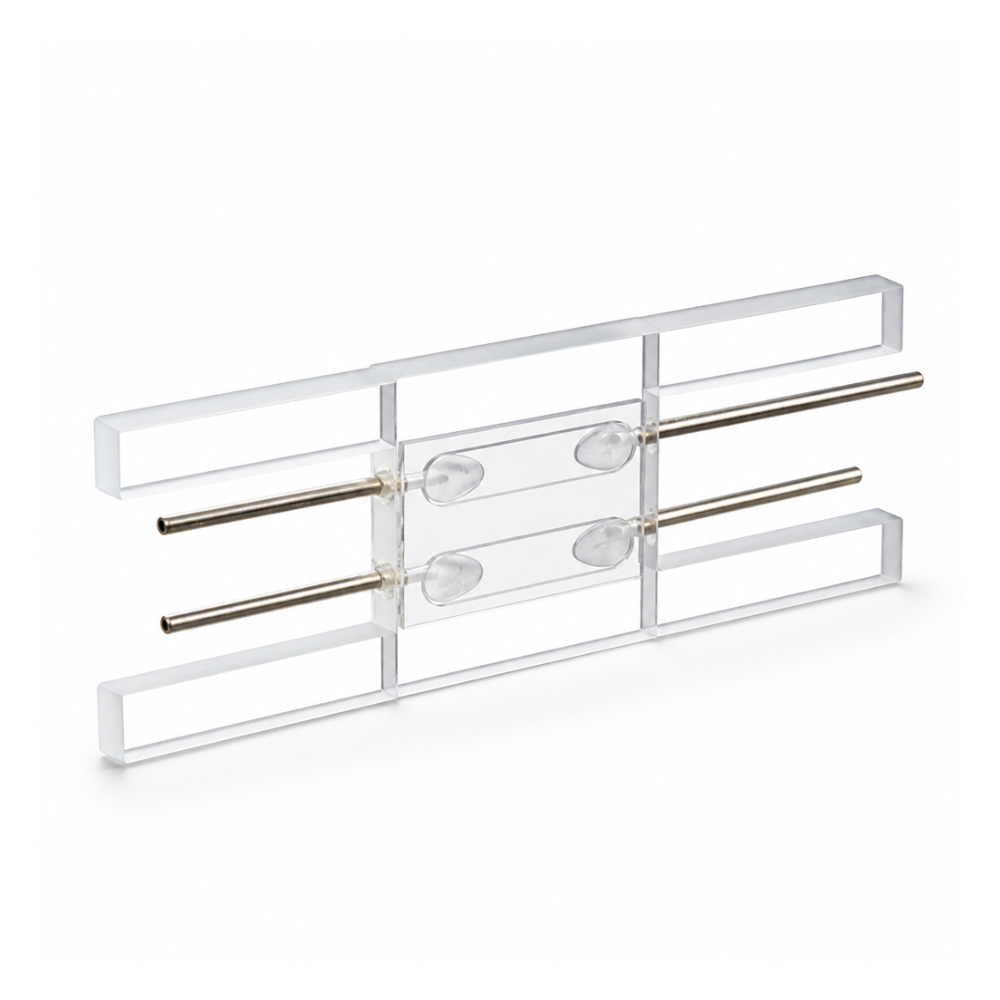
Dual-Channel Quartz Flow Counting Cell — 0.2 mm Pathlength · Adhesive-Bonded | CNQFT104
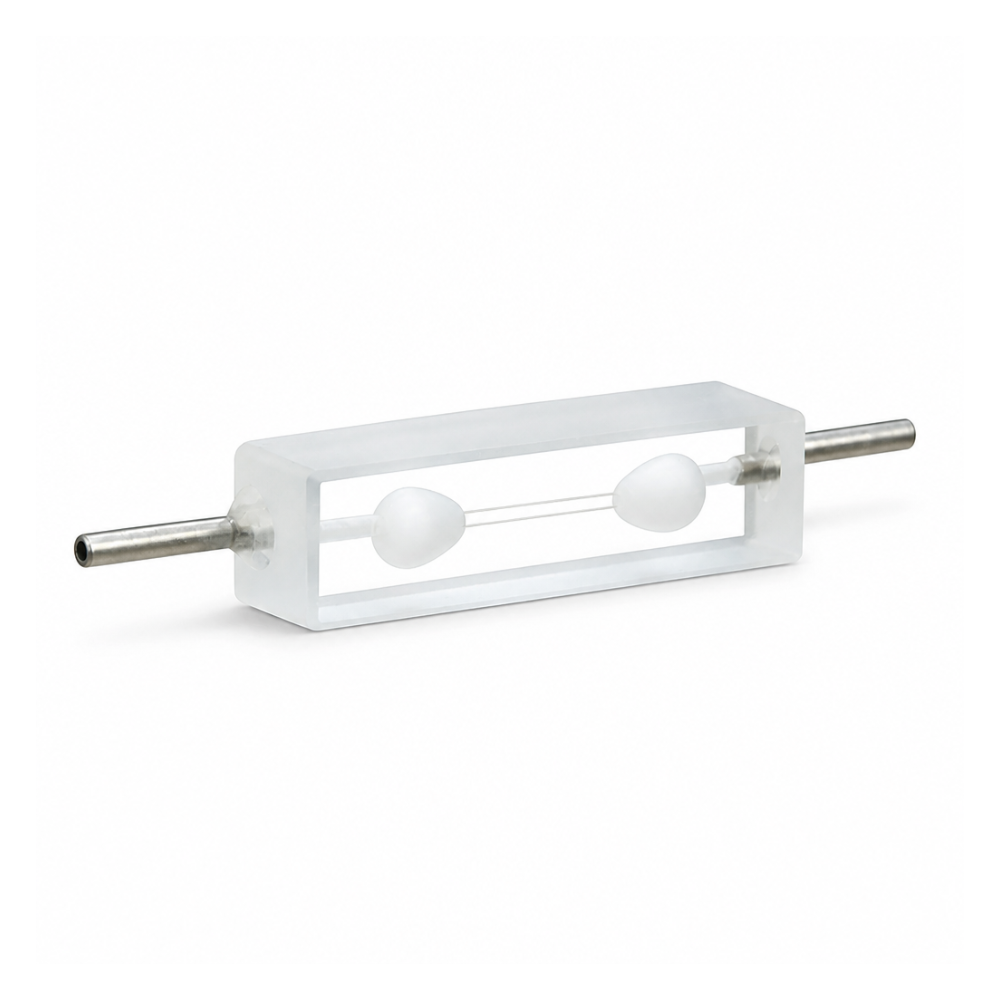
Quartz Flow Counting Cell — 0.05 mm Pathlength · 0.7 uL | CNMC116
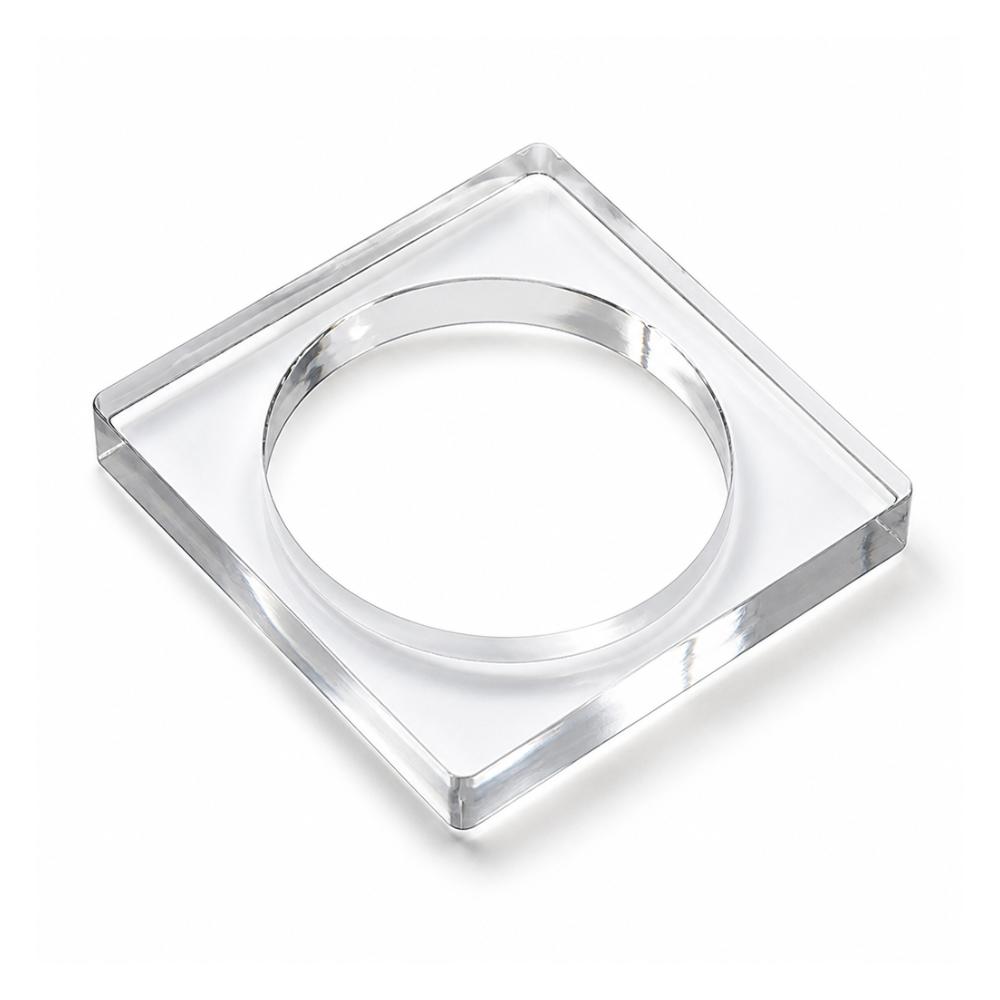
Fluorescence Quartz Solid and Powder Sample Cell — 12.5 × 12.5 mm · 1.5 mm Recess Depth | CNFC050
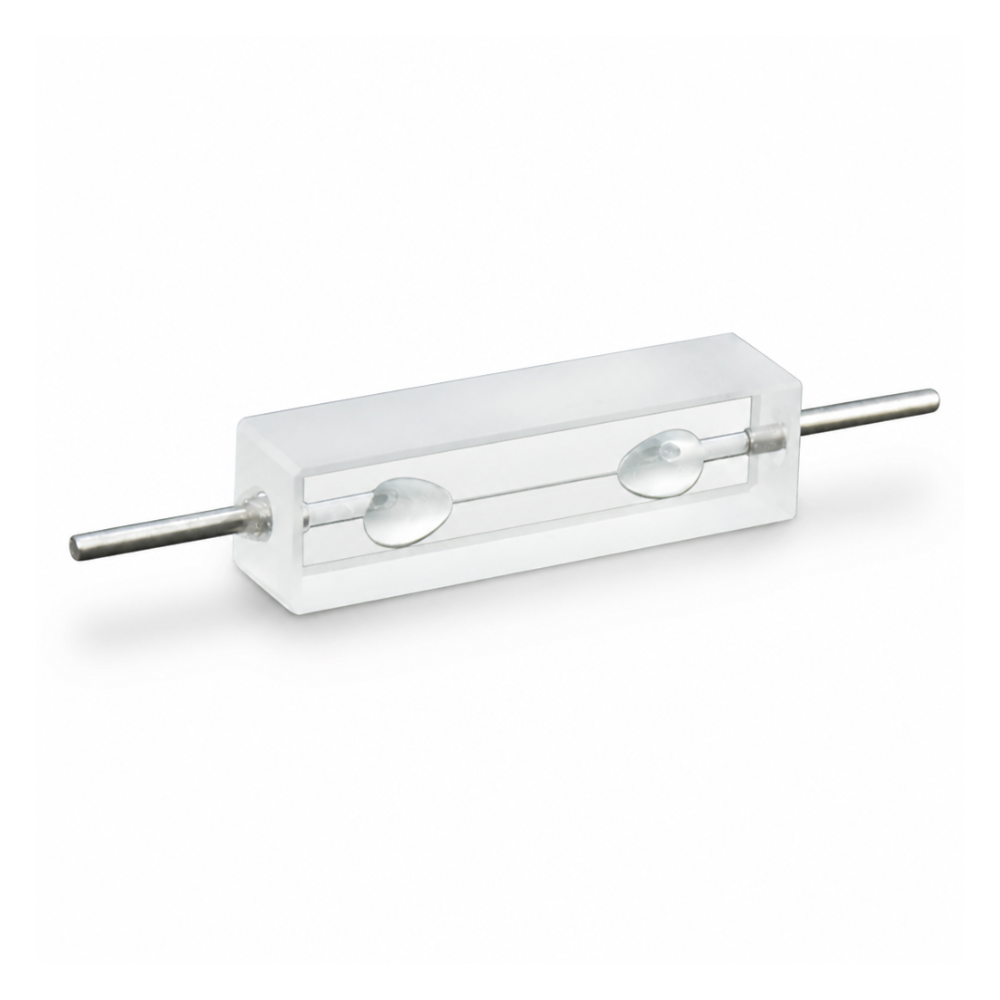
Quartz Flow Counting Cell — 0.05 mm Pathlength · 1 uL · Adhesive-Bonded | CNQFT087
6. Frequently Asked Engineering & Procurement Questions
DoesCuvetten supply empty evacuated/open-stem quartz vapor cell bodies or sealed hazardous alkali metals?
Cuvetten supplies clean, precision-fused empty optical quartz vapor cell bodies with open glassblowing tubulation stems, PTFE high-vacuum stopcock valves, or inline flow ports (100% non-hazardous air-courier compliant), ready for your laboratory UHV manifold filling or gas-flow spectroscopy.
Does atmospheric Helium permeate through thin fused-quartz vapor cell walls over multi-year operation?
Amorphous SiO2 has an open tetrahedral ring network with measurable permeation to small He atoms (~10^-10 cm3 STP*mm/(cm2*s*cmHg) at 20 C). For ultra-narrow clock/magnetometer cells sensitive to sub-mTorr buffer-gas pressure drift over years, store cells away from He leak-detector exhaust or specify low-permeation aluminosilicate windows.
Can exterior anti-reflection (AR) coatings survive a 350 C UHV manifold bakeout?
Standard electron-beam MgF2 coatings crack above ~200 C, whereas dense ion-beam-sputtered (IBS) SiO2/Ta2O5 hard coatings typically survive slow (< 2 C/min) clean vacuum bakeouts up to 300 C—confirm max bakeout temperature when ordering AR-coated empty cells.
How can university quantum-optics groups request custom pathlengths (1 mm to 150 mm) or wedged windows?
Submit optical pathlength, OD, stem size, and wedge angle via /request-a-quote/ to receive an engineering quotation from Cotslab Limited (UK Company No. 13153693, IRS Form W-8BEN-E, local US domestic CFSB USD routing ABA 026073150).
University, National Lab & Corporate PO Fast-Track (Cotslab Limited)
Cuvetten is operated by Cotslab Limited (37 Croydon Road, Beckenham, BR3 4AB, UK · UK Company No. 13153693). U.S. universities and national labs settle USD domestically with $0 international wire fees via Community Federal Savings Bank (New York, ABA Routing 026073150) paired with signed IRS Form W-8BEN-E, while European research groups pay via local EUR SEPA IBAN or Stripe P-Card.
Request Institutional PO Quote / Custom Specs →